



Unloading valve
An unloading valve is a critical component in hydraulic systems, designed to manage pressure and flow to ensure efficient and safe operation. Its primary function is to divert excess fluid flow back to the reservoir when the system pressure exceeds a predetermined threshold, thereby preventing overpressure conditions that could damage the system or compromise safety. This valve is particularly useful in systems where intermittent or varying loads are common, as it allows the pump to operate at a lower pressure when full flow is not required, reducing energy consumption and wear on the system.The unloading valve operates based on a balance of forces. It typically consists of a spool or poppet mechanism that is held in place by a spring. When the system pressure exceeds the spring's set force, the valve opens, allowing fluid to bypass the main circuit and return to the reservoir. Once the pressure drops below the set point, the spring forces the valve to close, redirecting flow back to the system. This cyclical operation ensures that the system maintains optimal pressure levels without continuous high-pressure operation.One of the key advantages of an unloading valve is its ability to reduce energy consumption. In systems where the pump operates continuously, the unloading valve allows the pump to "unload" when full flow is not needed, effectively reducing the load on the pump and minimizing energy usage. This not only lowers operational costs but also extends the lifespan of the pump and other system components by reducing wear and tear.Unloading valves are commonly used in applications such as hydraulic presses, injection molding machines, and other industrial machinery where precise pressure control is essential. They are also employed in systems with accumulators, where the valve helps maintain the desired pressure level by unloading the pump once the accumulator is charged.There are several types of unloading valves, including pilot-operated, direct-acting, and solenoid-controlled valves. Pilot-operated valves use a small pilot pressure to control the main valve, offering precise control and high flow capacity. Direct-acting valves rely solely on the system pressure to operate, making them simpler but less precise. Solenoid-controlled valves use an electrical signal to actuate the valve, providing remote control and automation capabilities.Proper selection and maintenance of an unloading valve are crucial for optimal system performance. Factors such as flow rate, pressure range, and system compatibility must be considered when choosing a valve. Regular inspection and maintenance, including checking for leaks, wear, and proper operation, are essential to ensure the valve continues to function effectively.In summary, an unloading valve is a vital component in hydraulic systems, providing pressure relief, energy efficiency, and system protection. Its ability to manage flow and pressure dynamically makes it indispensable in a wide range of industrial applications, contributing to safer, more efficient, and longer-lasting hydraulic systems.
Products
Category:
-
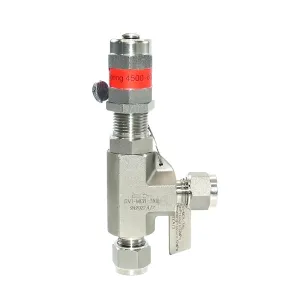
Compression fitting unloading valve
Category: Valve Group SeriesBrowse number: 125Number:Release time: 2025-08-06 16:03:53Product Materials: 316, 316L, copper, etc.Set Pressure: 32 MPa (50 to 6000 PSI)Operating Temperature: -23°C to 148°C (-10°F to 300°F)Port Size: 1/8" - 1/2", 3 mm - 12 mmPort Types: Double Ferrule, Threaded
News
Category:
No search results found!
Case
Category:
No search results found!
Video
Category:
No search results found!
Download
Category:
No search results found!
Job
Category:
No search results found!
Featured Products
No search results found!



 WhatsApp
 Phone